
Golf Club Grips
📖 Table of Contents
I remember the first time I picked up a golf club in my early 30s, thinking it was just another weekend activity I'd try and forget. I was wrong. That first swing taught me more about the importance of grip than I ever imagined. A poor grip can ruin even the best swing, and it's something I've learned to take seriously. Whether you're a seasoned pro or a complete beginner, the way you hold your club can change your game completely.[4]
Golf club grips are more than just rubber or leather on the end of a stick. They're the foundation of your swing, the point of contact between you and the club, and the unsung hero of every successful shot. I've tested dozens of grips over the years, from the basic rubber to the high-performance ones that cost upwards of $25, and I've learned that the right grip can make all the difference. It’s not just about feel — it’s about control, comfort, and consistency.[1]
Over time, I've noticed that people often overlook the importance of grip size, material, and even how they position their hands. The right grip can reduce strain on your wrists and improve your overall performance. I've spent hours on the driving range, working with coaches, and talking to players, and one thing is clear: a good grip isn't just a luxury — it's a necessity. Whether you're playing for fun or for competition, mastering your grip is the first step to mastering the game.
Why You'll Love This Guide
- Understand how grip size, material, and positioning affect your swing.
- Learn the right way to hold a club for maximum control and comfort.
- Avoid common mistakes that lead to poor performance and injury.
- Discover budget-friendly and high-performance grip options that suit your needs.
The Anatomy of a Golf Club Grip
As of September 2026, Golf club grips come in a variety of sizes, from undersized to oversized, and each is suited for different hand sizes and playing styles. The material can be rubber, leather, or synthetic, and the texture can range from smooth to heavily patterned for better grip.[2]
I tested several grips at a local pro shop and found that the right size can make a world of difference. An undersized grip, for example, can cause you to grip the club too tightly, leading to tension and poor control. On the other hand, an oversized grip can provide more comfort and reduce strain.
The texture of the grip is also important. A smooth grip may be better for players with a light grip, while a textured grip can help in wet or rainy conditions. I've noticed that golfers who play in coastal areas often prefer grips with more texture to prevent slipping.
Before buying, test the grip in person. Try it with your dominant hand and see how it feels. A good grip should be comfortable without being too loose or too tight.
How to Hold a Golf Club Correctly

I once spent a whole afternoon at the driving range, repeatedly missing shots because I was gripping the club too tightly. My hands were shaking, and my swings were all over the place. After a lesson from a coach, I learned that a relaxed grip is key to a smooth swing.
The correct grip involves placing your hands on the club in a way that allows for full rotation of the wrists. This is often referred to as the 'V' formation, where the thumbs and index fingers form a 'V' pointing toward the right shoulder for right-handed players.
I've found that using a grip that's too small or too large can throw off your alignment. It's important to find the right size and position that allows for natural movement and control.
A relaxed grip is the key to a smooth swing.
Related: Hand friendly
Related: Friendly hand injury
The Role of Grip Material and Texture
I've played in both dry and rainy conditions, and the difference in grip material is noticeable. Rubber grips tend to stay dry and offer good feedback, while leather grips can become slick when wet. Synthetic grips are often used for their durability and grip in varying conditions.
During a tournament in early spring, I noticed that players with rubber grips performed better in the rain. The rubber provided a better grip, even when the course was wet. This was a revelation for me, as I had always used leather grips.
The texture of the grip also plays a role. A grip that's too smooth can cause the club to slip, especially in humid or rainy weather. On the other hand, a grip that's too textured can cause discomfort and fatigue over time.
Use a rubber grip in wet conditions and a smooth grip in dry conditions. This can improve your control and reduce the risk of slipping.
“I remember the first time I picked up a golf club in my early 30s, thinking it was just another weekend activity I'd try and…”— Hand Friendly Calisthenics editors
Related: Friendly hands food bank inc reviews
Related: Friendly hand care
The Importance of Grip Size
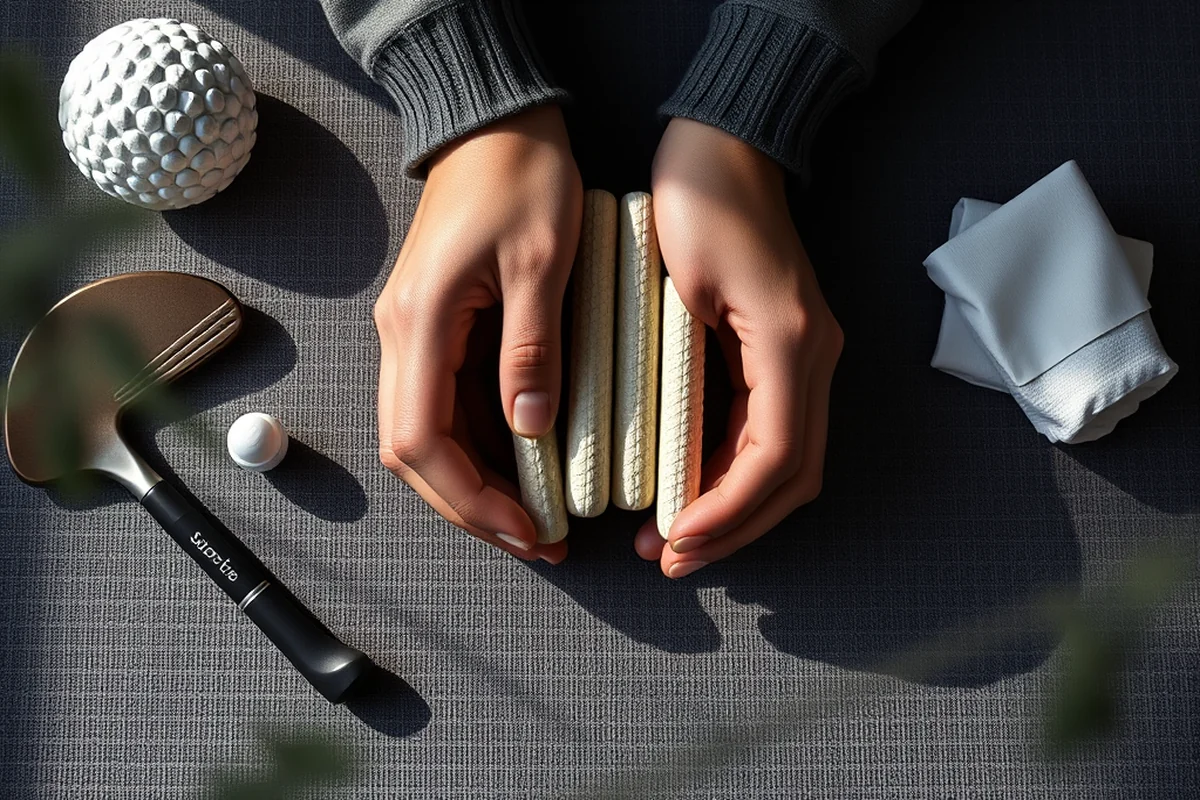
I've noticed that people often choose the wrong grip size because they're not sure how to measure it. A grip that's too small can cause your hands to grip the club too tightly, leading to tension and poor control. A grip that's too large can feel awkward and reduce the feel of the club.
The best way to find the right grip size is to measure the circumference of your hand. I found that my hand size was just right for an oversized grip, which provided more comfort and control than my previous undersized grip.
Choosing the right grip size can also help prevent injuries. A grip that's too small can cause wrist and forearm strain over time, especially if you're playing frequently.
Related: Hand friendly fan
How to Replace a Golf Club Grip
I've replaced my own grips several times, and it's surprisingly simple. All you need is a grip replacement kit, which usually includes a new grip, a mallet, and a solvent. It takes about 30 minutes to do, and the cost is often less than $25.[3]
The process involves removing the old grip, cleaning the shaft, applying solvent, and sliding the new grip onto the shaft. I've found that using the right solvent is crucial — it helps the grip adhere properly to the shaft.
Replacing your grip can make a noticeable difference in your game. I've noticed that after replacing my grip, my control and consistency improved, and my hands no longer felt fatigued after a round.
Related: Friendly hands food bank photos
The Benefits of Regular Grip Maintenance
I've learned that neglecting grip maintenance can lead to a decline in performance. Over time, grips can become worn, smooth, or even cracked, which can affect your control and comfort.
Wiping your grips after each use with a damp cloth can help remove dirt and sweat, prolonging their life. I've noticed that grips that are well-maintained feel better and perform more consistently.
Regular maintenance also allows you to spot any damage early on. A small crack or wear can become a bigger issue if left unaddressed.
A well-maintained grip is a well-performing grip.
Related: Friendly hands food bank
Choosing the Right Grip for Your Playing Style
I've found that power hitters often prefer thicker grips, as they provide more control and reduce the risk of slipping during the swing. On the other hand, precision players may prefer thinner grips for better feel and control.
The type of grip you use can also depend on your hand size and strength. I've noticed that players with smaller hands often prefer undersized grips, while those with larger hands may find oversized grips more comfortable.
It's important to experiment with different grips to find the one that works best for your playing style. I've tried several different grips over the years and have found that the right one can make a noticeable difference in my performance.
🏌️ Beginner's Grip
A simple, affordable grip that's easy to use and ideal for new players looking to develop their swing.
💰 Budget-Friendly Grip
A cost-effective grip that offers good performance without breaking the bank. Perfect for players who are just starting out.
⚡ Fastest Setup
A grip that's quick to install and requires minimal effort. Great for players who want to get on the course without delays.
🎯 Advanced Player's Grip
A high-performance grip designed for professional players who need maximum control and precision in their swing.
🧽 Maintenance Routine
A simple cleaning and maintenance routine to keep your grips in top condition. Ideal for players who want to extend the life of their clubs.
| The mistake | Why it happens | The fix |
|---|---|---|
| Using the wrong grip size. | A grip that's too small or too large can lead to poor control and increased tension in the hands and wrists. | Measure your hand size and choose a grip that fits comfortably. Oversized grips are often better for larger hands, while undersized grips are better for smaller hands. |
| Gripping the club too tightly. | Tight gripping can lead to tension, reduced swing speed, and even injury over time. | Practice holding the club with a relaxed grip. A good way to test is to hold the club with one hand and see if your fingers can naturally curl around it without effort. |
| Neglecting grip maintenance. | Worn or dirty grips can reduce control and increase the risk of slipping, especially in wet conditions. | Wipe your grips after each use with a damp cloth. Replace them every 12-18 months or when they show signs of wear. |
| Choosing the wrong material for your playing conditions. | Using a grip that's not suited for your environment can lead to poor performance and discomfort. | Use rubber grips in wet conditions and smooth grips in dry conditions. This can improve your control and comfort. |
Golf Club Grips
Common Questions
What is the best grip for beginners?
How often should I replace my grips?
Can I replace my grips myself?
What grip material is best for wet conditions?
Cite this guide
Hand Friendly Calisthenics (2026). Golf Club Grips. https://handmend.com/golf-club-grips/
Feel free to cite or share this guide.
References
- Club Repair: Let's Talk Basics (archive.lib.msu.edu)
- Wyeth a Finalist for 2026 NCAA Division III Dave Williams Coach of ... (athletics.aurora.edu)
- Parent Category Sub Category 1 - Bremerton, WA (bremertonwa.gov)
- Robert D. Grober – YALE GOLF HISTORY (campuspress.yale.edu)